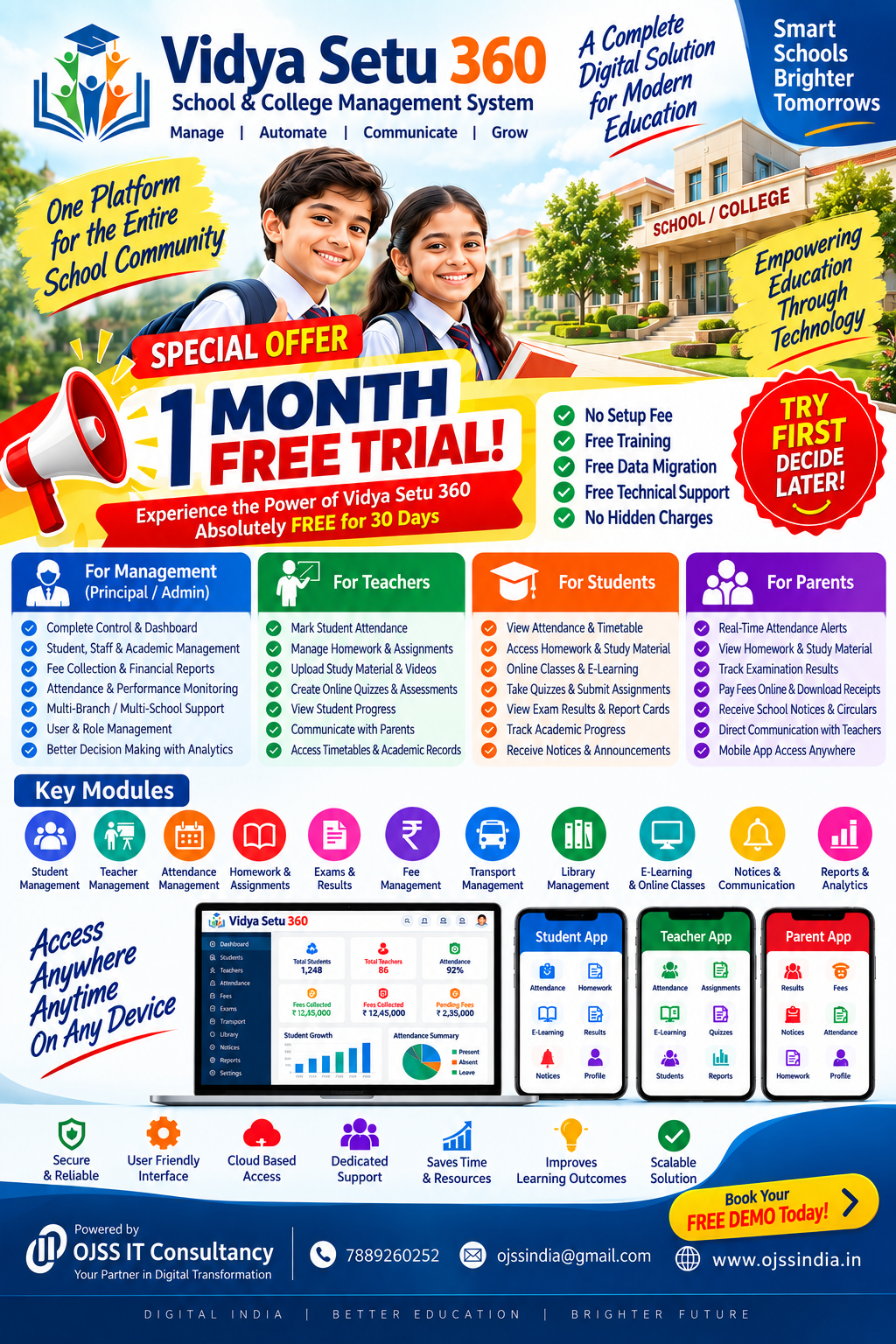
In today's rapidly evolving educational landscape, schools are no longer limited to traditional teaching and administrative methods. With increasing student enrollment, growing administrative responsibilities, and the need for transparent communication, educational institutions are embracing digital transformation through School Management ERP (Enterprise Resource Planning) Software.
A School Management ERP serves as a centralized platform that integrates various academic and administrative activities into a single system. It helps school management, teachers, students, and parents stay connected while ensuring efficient operations and improved educational outcomes.
Key Benefits of School Management ERP Software
1. Streamlined Administration
ERP software automates routine administrative tasks such as admissions, fee management, attendance tracking, timetable scheduling, examination management, and report card generation. This reduces paperwork and saves valuable time for school staff.
2. Enhanced Communication
Effective communication is essential for a successful educational environment. School ERP systems provide instant communication channels through SMS, email, mobile apps, and notifications, enabling seamless interaction between schools, parents, teachers, and students.
3. Efficient Attendance Management
Teachers can mark attendance digitally, and parents receive real-time updates regarding their child's attendance. This improves accountability and helps schools maintain accurate records.
4. Simplified Fee Management
The software automates fee collection, receipt generation, pending fee reminders, and online payment processing, making financial management more transparent and efficient.
5. Better Academic Monitoring
Schools can track student performance, examination results, assignments, and progress reports through a centralized dashboard. This enables teachers and parents to identify strengths and areas requiring improvement.
6. Data Security and Record Management
Important student, staff, and institutional records are securely stored in a centralized database, reducing the risk of data loss and ensuring quick access to information whenever required.
7. Improved Decision Making
Comprehensive reports and analytics help school administrators make informed decisions related to academics, finance, human resources, and institutional growth.
8. Parent Engagement
Modern ERP systems offer dedicated parent portals and mobile applications where parents can monitor attendance, homework, examination results, fee status, and school announcements, fostering greater involvement in their child's education.
9. Teacher Productivity
Teachers can focus more on teaching and student development rather than administrative paperwork. Features such as lesson planning, assignment management, and digital assessments enhance teaching efficiency.
10. Digital Transformation and Future Readiness
A School Management ERP prepares educational institutions for the future by promoting paperless operations, digital learning integration, and smart school management practices.
Conclusion
The adoption of School Management ERP Software has become a necessity rather than a luxury for modern educational institutions. By automating processes, enhancing communication, improving transparency, and providing data-driven insights, ERP solutions empower schools to deliver better educational services while ensuring operational excellence.
As schools continue to embrace technology-driven solutions, School Management ERP Software will play a crucial role in building smarter, more efficient, and future-ready educational institutions.